Evan Michaels–Clovis mentorship
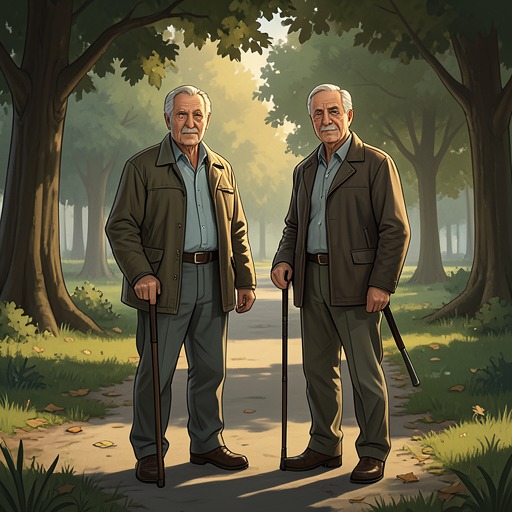
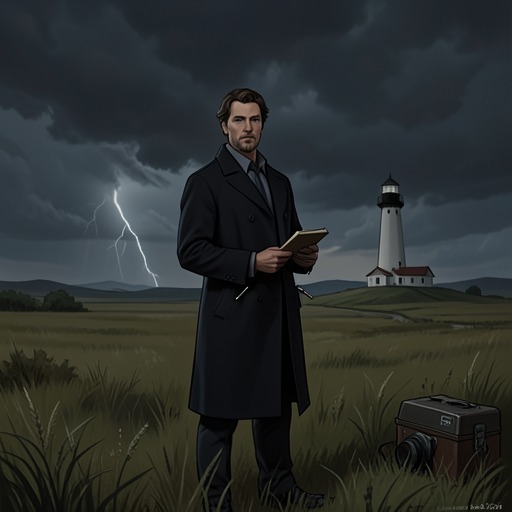
The Reincarnationist PapersThe Evan Michaels–Clovis mentorship is a brief but consequential relationship formed after Evan enters the Cognomina. Clovis offers him more than advice: he provides a home and time to consider what to do next. Their conversations give Evan a language for thinking about choice, risk, and the burdens that accompany a long life. Yet the mentorship ends not in agreement or farewell, but in Evan’s sudden departure after a discovery in Clovis’s storeroom.
From Initiation to Counsel
Evan first encounters Clovis within the Cognomina’s community, where membership follows Ascension, a trial in which a candidate must persuade people who knew him before that he has returned in a new body. The process makes belonging depend on proof and on other members’ judgment. When a panel accepts Evan by a vote of four to one, Samas embraces him; the gallery responds with both groans and cheers as wagers are settled. Evan is welcomed as a brother, but entry does not immediately settle what he should do with his new place in the group.
That uncertainty comes into view when Clovis asks whether Samas’s generous offer is occupying Evan’s thoughts. Evan says that he is considering accepting it, but that the timing troubles him: Samas is eager to recover something dear to him, while Evan is still trying to absorb the changes in his own life. Clovis does not tell him to refuse. Instead, he identifies a pressure that can accompany entry into the Cognomina: newcomers may feel too awed by those who welcomed them to disagree or decline. He insists that they are equals. Evan appreciates the concern, while recognizing that the deference shown to Clovis makes that equality feel complicated in practice.
Clovis recommends a period of introspection rather than an immediate decision. When Evan agrees, Clovis offers a practical way to make that possible: Evan can leave with him that night and stay at his home, where he can reflect without the influence of the people pressing for an answer. He says he rarely has visitors and would welcome Evan’s company. Evan accepts readily and plans to be ready within half an hour. The invitation turns abstract counsel into hospitality, giving their relationship an intimate setting beyond the public rhythms of the Cognomina.
Hospitality and the Practice of Waiting
During the visit, Clovis allows Evan several days alone. Evan later thanks him for that space, and Clovis answers that this is simply his way. Their exchanges suggest a mentorship built less on instruction than on making room for Evan to think. Clovis does not demand that his guest explain himself on a schedule; when he asks how Evan is managing his demons, the question is direct, but it comes during an ordinary shared activity, with Clovis attending to his fishing line.
Clovis’s response to the same question is oblique. He reflects on having both rejected and held close his demons, then presents the thought as his own poem. The moment reveals a personal vocabulary for endurance, but not a full account of what he has endured. Evan’s own answer remains unresolved: he is still wrestling with his troubles and asks Clovis about his in return. The exchange establishes a measure of mutual candor, while preserving a difference between them. Clovis can turn his experience into a composed reflection; Evan is still trying to find his way through immediate change.
Risk, Freedom, and Patience
Clovis’s guidance becomes sharper when Evan considers his options as a question of freedom. Evan compares the conditions of Clovis’s exile, despite their beauty, with those of the Ohio Hotel and says he wants to live as comfortably as possible. Clovis reframes the dilemma: if comfort is the whole question, Evan may be laboring over it unnecessarily. He reminds Evan that Auda has given him wealth, making material ease a choice already within reach rather than an answer to everything troubling him.
The distinction matters because Evan’s possible agreement with Samas carries hazards as well as rewards. Clovis acknowledges that bodily peril holds only limited terror for people like them, but warns that other dangers remain. He also recognizes Evan’s youthful appetite for action and cautions that Samas understands it too. In Clovis’s view, the proposal promises immediate rewards, but patience may be wiser than acting simply because Evan can. His counsel is neither a command nor a denial of Evan’s freedom: it is an effort to make Evan consider what urgency might conceal.
Clovis’s broader reflections give that advice a philosophical frame. He describes people like themselves as victims and hostages, and considers how beliefs in the transmigration of the soul once offered a way to understand them. Those beliefs, he argues, lost their force when their gods became too tangible and too much like their worshippers. Evan engages with the image of a hostage in a tower, and Clovis extends it from stone to ivory or gold: a more beautiful enclosure remains an enclosure. Evan accepts the practical implication that he can choose the material of his cell, while still wanting comfort. Clovis does not erase the contradiction. He brings Evan back to the limited but real choices available to him, then returns to the need for patience.
Discovery and Departure
The mentorship breaks at Clovis’s home, where Evan comes upon shelves of ink bottles and crates filled with pages. The pages do not show a poem advancing by one new entry each day; they repeat the same stanza, which Clovis has worked over day after day. Evan sees dozens of similar crates. The discovery changes the meaning of the patience Clovis has been urging: its scale is no longer just a piece of advice offered to a restless newcomer, but a practice visible in the accumulated pages of Clovis’s own life. The text does not explain what the poem means to him or why he has repeated it for so long.
Evan responds not by asking Clovis about the pages but by packing. He takes his possessions, puts a dagger at his waistband, harnesses the horse to the wagon, and leaves. As he turns toward Mocha, he sees Clovis standing in the water but has nothing to say. The departure is abrupt precisely because Clovis had granted him time and welcomed him into his home; Evan now uses that distance to escape without explaining what he has found.
The ending leaves their relationship unresolved. Clovis’s care has helped Evan pause, reflect, and consider the difference between comfort and freedom, but it has not made Evan willing to remain when he encounters something he cannot place. Their bond therefore joins genuine mentorship to an unspoken rupture: Clovis offers counsel without forcing a choice, while Evan ultimately chooses departure without giving his mentor a chance to answer.